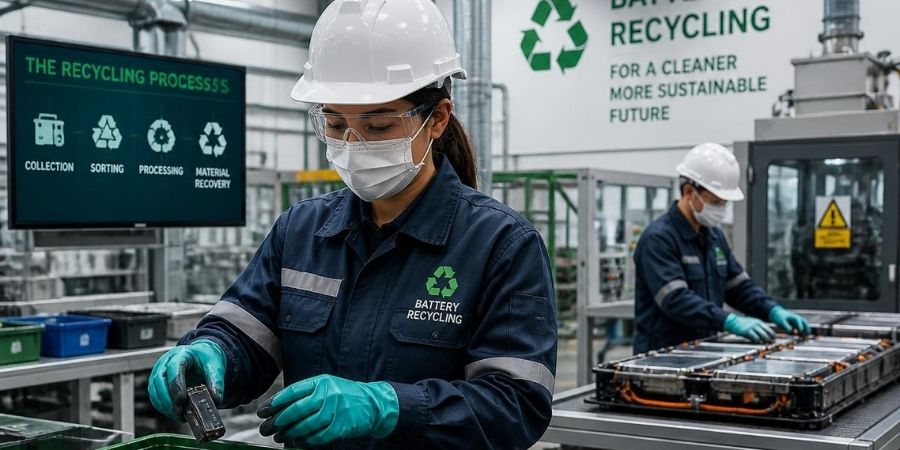
A used battery may look like a small piece of waste, but it should not necessarily be treated like ordinary garbage.
Think about the number of batteries used across an office, factory, warehouse, hospital, educational institution or electronics business. There may be laptop batteries, UPS batteries, vehicle batteries, power-tool batteries, mobile batteries, industrial batteries and increasingly, batteries from electric vehicles.
Once these batteries reach the end of their useful life, the question is simple: what happens next?
Safe battery waste disposal is about more than getting unwanted batteries out of the workplace. Batteries need to be collected, stored, transported and processed through appropriate channels. Some battery types can also present fire, leakage or chemical hazards if damaged or handled incorrectly.
For businesses, responsible battery management also connects with environmental compliance, recycling, documentation and, for relevant producers, Extended Producer Responsibility requirements.
This guide explains how battery waste disposal works, what businesses should avoid, and when professional battery recycling support can make sense.
What Is Battery Waste Disposal?
Battery waste disposal refers to the responsible handling of batteries that are no longer usable, including their collection, storage, transportation, refurbishment or recycling and appropriate end-of-life treatment.
Batteries come in many forms and chemistries. They can be found in:
- Laptops and computers
- Smartphones and tablets
- UPS systems
- Inverters
- Automobiles
- Electric vehicles
- Power tools
- Industrial equipment
- Consumer electronics
- Backup power systems
Not all batteries should be handled in exactly the same way.
A small rechargeable battery from a laptop has different characteristics from a large industrial battery bank. An EV battery is also very different from a conventional household battery.
That is why responsible battery waste management starts with identifying and separating the waste properly rather than putting everything into one general waste stream.
In India, battery waste is governed separately from e-waste under the Battery Waste Management Rules, 2022, with subsequent amendments. The Ministry of Environment, Forest and Climate Change lists amendments issued in 2023, 2024 and 2025.
Why Does Safe Battery Waste Disposal Matter?
Batteries should not simply go into general waste
One of the most basic mistakes is putting used batteries into mixed household or commercial waste.
India’s Battery Waste Management Rules specifically place responsibility on consumers to discard waste batteries separately from other waste streams and ensure that they are given to appropriate entities involved in collection, refurbishment or recycling.
For businesses generating larger quantities, having a defined collection and storage process becomes even more important.
Damaged batteries can create safety concerns
A battery that is swollen, leaking, crushed or physically damaged should not be treated in the same way as an intact battery.
Certain rechargeable battery types, particularly lithium-based batteries, can become hazardous when damaged or improperly handled.
This is one reason businesses should avoid casually storing damaged batteries alongside general electronic equipment.
If a battery shows signs of damage, overheating, swelling or leakage, it should be isolated from normal waste handling and managed through an appropriate professional process.
Batteries contain materials that can be recovered
A battery is not simply a container of chemicals.
Depending on the battery type, recycling can recover useful materials and reduce the need to treat the entire battery as disposable waste.
The Battery Waste Management Rules establish material recovery targets for different battery categories, with the applicable targets varying by battery type and year.
This makes proper recycling important from both a waste-management and resource-recovery perspective.
Businesses may have regulatory responsibilities
The Battery Waste Management Rules, 2022 established an Extended Producer Responsibility framework for relevant producers.
CPCB states that producers have EPR obligations for batteries they introduce into the market and that waste batteries are to be recycled through appropriate registered/certified recycling channels for fulfilling applicable obligations.
However, not every business handling a used battery automatically has the same compliance responsibility.
The applicable requirements depend on the organization’s role, the battery type and the nature of its activities.
What Types of Battery Waste Need to Be Managed?
Battery waste can come from many different sources.
Portable Batteries
These are commonly found in devices such as:
- Laptops
- Mobile phones
- Tablets
- Cameras
- Remote controls
- Power tools
- Small electronic devices
Businesses can generate considerable quantities of portable battery waste through employee devices, IT replacement programs and electronic equipment maintenance.
Automotive Batteries
Vehicles use batteries for starting, power and other functions.
Workshops, fleet operators, automobile businesses and industrial organizations may generate automotive battery waste regularly.
Industrial Batteries
Industrial facilities may use batteries for backup power, equipment and other operational purposes.
These can include batteries associated with UPS systems, energy storage and industrial equipment.
Electric Vehicle Batteries
EV batteries are a rapidly growing category of battery waste as electric mobility expands.
They require particular attention because of their size, weight, chemistry and energy storage characteristics.
A damaged EV battery should not be treated like a small consumer battery.
For organizations handling EV batteries, specialized assessment, transportation and recycling arrangements may be necessary.
How Does the Battery Recycling Process Work?
The exact process depends on the battery chemistry, condition, size and intended treatment route. A simplified responsible workflow can look like this.
1. Collection
Used batteries are collected from the locations where they are generated.
For a business, this could mean collecting batteries from offices, workshops, warehouses, service centers, factories or vehicle operations.
The first priority should be to prevent batteries from being mixed with unrelated waste.
2. Identification and Segregation
Batteries can then be identified and separated according to their type, condition and chemistry.
This step matters because different batteries may require different handling and recycling processes.
Damaged or compromised batteries may also need special attention.
3. Safe Storage
Before transportation, batteries should be stored in a way that reduces the risk of damage, short circuits, leakage or other incidents.
Businesses should follow the handling guidance applicable to the battery type and the requirements of their recycling or collection partner.
A battery storage area should not simply become a pile of mixed, loose batteries.
4. Transportation
Batteries are moved to the appropriate collection, refurbishment or recycling facility.
Transportation requirements can vary depending on the type and condition of the battery. This is particularly relevant for larger batteries and damaged lithium-based batteries.
5. Assessment
Depending on the battery and its condition, it may be assessed for possible reuse, refurbishment or direct recycling.
Not every used battery follows the same path.
6. Recycling and Material Recovery
Batteries that are sent for recycling undergo processes designed to recover useful materials and manage the remaining components appropriately.
The exact recycling technology depends on the battery chemistry and the recycling facility.
The Battery Waste Management Rules include recovery targets for portable, automotive, industrial and electric vehicle battery categories.
7. Documentation
For businesses, the process should ideally leave an appropriate record of what was collected and where it was sent.
Documentation becomes particularly important for organizations managing larger quantities or dealing with environmental compliance requirements.
Battery Waste Disposal vs. Battery Recycling
These terms are often used interchangeably, but there is a useful distinction.
Battery disposal generally refers to the final handling of waste batteries.
Battery recycling focuses on processing waste batteries to recover materials and reduce the amount requiring final disposal.
Responsible battery waste management should prioritize appropriate collection and recycling or refurbishment routes wherever applicable rather than simply treating batteries as general waste.
This is especially important because the Battery Waste Management Rules place emphasis on recycling and refurbishment and establish EPR mechanisms for relevant producers.
Common Battery Disposal Mistakes Businesses Should Avoid
Throwing batteries into general waste
This is one of the simplest mistakes to prevent.
Used batteries should be separated from mixed waste and directed through appropriate collection, refurbishment or recycling channels.
Mixing different battery types
Portable, automotive, industrial and EV batteries can have very different characteristics.
A basic segregation system can make handling safer and easier to manage.
Ignoring damaged batteries
A swollen, leaking or damaged battery should not simply be placed in a normal collection box.
It may require specific handling arrangements.
Storing batteries indefinitely
A temporary collection area can easily become a long-term storage area if a company does not have a defined collection schedule.
Regular movement of accumulated battery waste helps maintain better control.
Choosing an unverified recycler
A company may focus on the price offered for used batteries without asking where the batteries will actually go.
Businesses should verify the relevant registration, authorization and service capability of the entity they use.
Focusing only on weight
A large quantity of batteries is not just a scrap-value calculation.
The type, condition, chemistry, handling requirements and applicable compliance obligations can all matter.
Best Practices for Responsible Battery Waste Management
Businesses can make battery disposal considerably more organized with a few practical measures.
Separate battery waste at the source
Do not wait until different waste streams have already been mixed.
Provide designated collection arrangements for used batteries.
Identify the battery type
Keep basic information about the battery where possible, especially for industrial and larger battery systems.
Keep damaged batteries separate
Do not mix damaged or leaking batteries with normal battery waste.
Follow appropriate safety procedures and seek professional handling when necessary.
Train relevant employees
Employees who handle equipment, maintenance, warehouse operations or waste should know where used batteries are supposed to go.
Maintain records
For larger operations, keep records of quantities collected, collection dates, battery categories and the recycling or processing route.
Use appropriate recycling channels
Verify that the recycling or collection partner is authorized or registered as applicable to the relevant waste stream.
Review EPR requirements where applicable
Producers and other obligated entities should understand the requirements that apply to their specific activities under the Battery Waste Management framework.
Battery Waste Management and EPR in India
Extended Producer Responsibility is an important part of India’s battery waste framework.
Under the Battery Waste Management Rules, 2022, relevant producers have responsibility for meeting applicable EPR obligations associated with batteries they introduce into the market. CPCB’s published guidance describes registration and the use of EPR certificates linked to recycling or refurbishment activities.
The framework has also been amended since 2022. The Ministry of Environment, Forest and Climate Change lists amendments from 2023, multiple amendments in 2024, and a further amendment in 2025.
This is an area where businesses should avoid relying on old blog posts or generic compliance checklists.
If your organization is a producer, importer, manufacturer, refurbisher, recycler or another entity covered by the rules, check the current CPCB and Ministry requirements applicable to your role.
Regulatory note: This article provides general educational information, not legal or compliance advice. Specific EPR obligations should be verified against the latest applicable rules and CPCB requirements.
When Should a Business Consider Professional Battery Waste Disposal Services?
Professional support becomes particularly useful when battery waste is generated regularly or in significant quantities.
Consider professional battery waste management if your organization handles:
- Large quantities of used batteries
- Laptop and mobile device batteries
- UPS or inverter batteries
- Automotive batteries
- Industrial battery systems
- EV batteries
- Damaged or end-of-life batteries
- Battery waste from multiple locations
- Battery waste requiring documentation
- EPR-related responsibilities
For example, an organization replacing hundreds of laptops may suddenly have a substantial number of used lithium-ion batteries.
Instead of mixing those batteries with general electronic waste, a structured process can separate them, record the quantities and direct them toward the appropriate handling route.
BRP Infotech provides battery waste disposal services for organizations looking for structured support in handling different types of battery waste.
For businesses managing battery waste alongside obsolete computers, phones, servers or other electronics, E-Waste Management services may also form part of a broader waste management program.
A Simple Example of Responsible Battery Disposal
Consider a company with offices across several Indian cities.
Over the year, employees replace laptops and mobile devices, the maintenance team replaces UPS batteries, and the facilities department handles other battery-powered equipment.
Without a defined system, all these batteries may end up in different storage areas.
A more organized approach could look like:
Collection → Identification → Segregation → Safe Storage → Authorized/appropriate Collection → Recycling or Refurbishment → Documentation
The process does not have to be complicated.
The important part is having a clear answer to three questions:
What type of battery is this?
How should it be handled safely?
Where should it go next?
That basic discipline can prevent battery waste from becoming an unmanaged environmental or operational problem.
Frequently Asked Questions
What is battery waste disposal?
Battery waste disposal is the responsible handling of batteries that have reached the end of their useful life. Depending on the battery and applicable requirements, this can involve collection, segregation, storage, transportation, refurbishment, recycling and appropriate final treatment.
Can batteries be thrown in regular garbage?
Batteries should not simply be mixed with general waste. India’s Battery Waste Management Rules require consumers to discard waste batteries separately and ensure that they are directed to appropriate collection, refurbishment or recycling channels.
Why is battery recycling important?
Battery recycling can help recover useful materials and reduce the amount of battery waste requiring final disposal. It also provides a controlled route for managing batteries that should not enter ordinary waste streams.
How should damaged batteries be handled?
Damaged, swollen, leaking or otherwise compromised batteries require additional care. They should not be casually mixed with normal battery waste. The appropriate response depends on the battery type and condition, and professional handling may be necessary.
What types of batteries can be recycled?
Many battery categories can enter recycling or refurbishment systems, including portable, automotive, industrial and electric vehicle batteries. The exact recycling process depends on the battery type and chemistry.
What is Battery EPR?
Battery Extended Producer Responsibility, or EPR, is a regulatory framework under which relevant producers have responsibilities associated with the collection, recycling or refurbishment of waste batteries and applicable targets. CPCB provides registration and EPR mechanisms for covered producers.
When should a business use a professional battery recycling service?
Professional support can be useful when a business generates large quantities of battery waste, handles industrial or EV batteries, operates across multiple locations, has damaged batteries or needs structured collection and documentation.
Conclusion
Safe battery waste disposal starts with recognizing that a used battery is not ordinary waste.
Different batteries have different characteristics, and responsible management means separating them, storing them appropriately, using suitable collection channels and ensuring they reach the right recycling or refurbishment route.
For businesses, the process becomes even more important when battery waste is generated regularly or in large quantities. A structured approach can make handling easier while supporting responsible resource recovery and applicable environmental requirements.
If your organization has used, damaged or end-of-life batteries that need to be handled responsibly, professional support can make the process more organized and traceable. BRP Infotech’s Battery Waste Disposal service can be considered for businesses looking for structured battery waste management support.