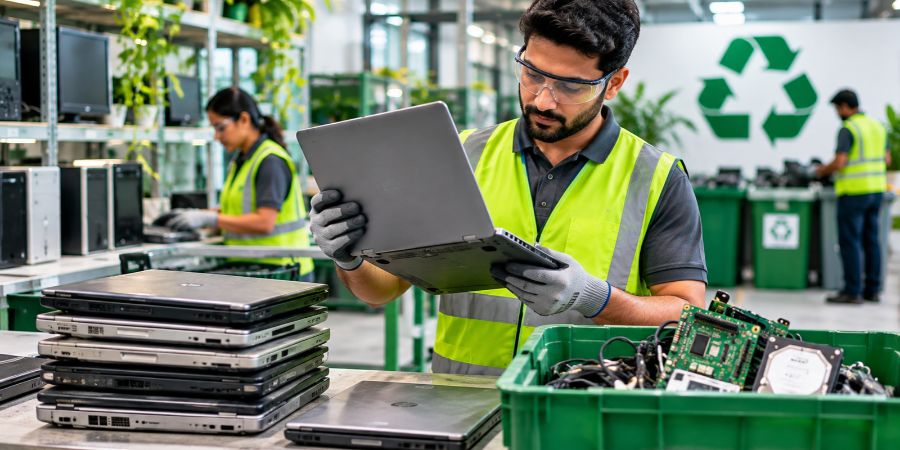
Almost everyone has an old electronic device somewhere at home or in the office. It might be an unused laptop, a damaged mobile phone, an outdated desktop computer or a printer that no longer works.
Many people keep these devices in cupboards or storage rooms because they believe they might need them someday. Others simply throw them away with regular household waste.
But have you ever wondered what actually happens after an old laptop or computer is discarded?
Electronic devices do not simply disappear when we stop using them. They contain valuable materials, reusable components and, in some cases, substances that require careful handling. If they are not managed properly, they can create environmental and data security concerns.
Understanding what happens to old electronics can help individuals and businesses make better decisions about their disposal.
Why Do People Keep Old Electronic Devices?
Keeping an old device may seem harmless, but unused electronics can become a growing waste problem.
There are several common reasons why people hold on to outdated devices:
- Personal data concerns: People worry that their photos, documents, passwords and other information may still be accessible.
- Future use: Many believe an old laptop or phone might be useful as a backup.
- Uncertainty about disposal: Not everyone knows where to send electronic waste.
- Low resale value: Some devices are too old or damaged to attract buyers.
- Lack of awareness: People may not realise that electronics require responsible disposal.
A January 2026 NITI Aayog report on the circular economy of e-waste and lithium-ion batteries in India highlights this challenge. It reports that nearly 60% of consumers retain unused devices, while concerns about data privacy and theft are among the reasons people hesitate to dispose of them.
This shows why awareness and convenient collection systems are important.
What Happens When You Throw Away an Old Laptop?
The journey of an old laptop depends on where it goes after disposal. It may be reused, refurbished, dismantled or sent for recycling.
However, when electronic waste enters an informal or unregulated disposal channel, its components may be handled without adequate environmental or safety controls.
Here is what can happen to an old laptop when it enters a responsible recycling process.
1. Collection and Sorting
The first step is collecting discarded electronic equipment and separating it according to its type and condition.
Laptops, desktop computers, monitors, printers, servers, cables and other electronic devices may require different handling methods.
Sorting helps identify which equipment can potentially be reused, refurbished or sent for recycling.
2. Inspection and Reuse Assessment
Not every old electronic device needs to be dismantled immediately.
Some computers may still be functional or repairable. Their components may also have reuse value.
During inspection, equipment can be assessed for its physical condition, working status and potential for refurbishment.
Extending the useful life of suitable equipment can reduce the need to manufacture replacement products and help prevent unnecessary waste.
3. Secure Data Destruction
An old laptop may contain more than just hardware. It can also store personal photographs, business documents, customer records, financial information and confidential files.
Deleting files or performing a quick factory reset does not always provide sufficient assurance that sensitive information has been permanently removed.
Before a device is reused, refurbished or recycled, its storage media should be handled through an appropriate data sanitisation or destruction process.
Businesses handling large volumes of computers and storage devices should consider a documented data destruction process.
Learn more about secure data destruction services by BRP Infotech.
4. Dismantling and Material Recovery
Devices that cannot be reused may be dismantled through appropriate recycling processes.
Different components can contain materials such as iron, aluminium, copper and other recoverable resources. Certain electronic components may also contain small quantities of precious metals.
Responsible recycling aims to recover useful materials while managing hazardous substances and residues safely.
The recovered materials can re-enter appropriate manufacturing and production supply chains, reducing dependence on newly extracted raw materials.
5. Responsible Recycling and Final Processing
After dismantling, recovered materials are separated and directed towards suitable processing and recycling channels.
Materials that cannot be recovered through a particular process must also be managed appropriately.
This is why choosing a responsible e-waste management and recycling partner matters. The objective is not simply to remove old equipment from a premises. It is to ensure that the equipment enters an appropriate collection, recovery and recycling process.
Why Should You Never Throw Electronics Into Regular Household Waste?
Electronic equipment can contain materials that require specialised handling. Some components may include lead, mercury, cadmium and other substances that can create environmental and health risks if handled improperly.
Discarded batteries can also present additional risks when damaged, crushed or exposed to unsuitable conditions.
Mixing electronic waste with everyday garbage makes proper identification, collection and recovery more difficult.
Responsible disposal helps:
- Reduce the risk of uncontrolled electronic waste handling.
- Recover reusable materials and components.
- Support better resource management.
- Reduce the amount of e-waste going to unsuitable disposal channels.
- Improve the traceability of waste collection and recycling.
The goal should be to keep electronic waste within an appropriate collection and recycling system rather than treating it like ordinary garbage.
What Should Businesses Do With Old Computers and IT Equipment?
Businesses often generate electronic waste in larger quantities than individual households.
Office upgrades, employee replacements, IT infrastructure changes and equipment failures can leave organisations with old computers, laptops, servers, printers, networking devices and storage equipment.
Simply storing these assets indefinitely can create unnecessary storage and information security challenges.
A structured disposal process can make equipment management easier.
Here are some practical steps businesses can follow:
1. Maintain an asset inventory
Record the type, quantity, condition and location of electronic equipment that has reached the end of its useful life.
2. Identify equipment for reuse
Check whether working devices can be repaired, refurbished or redeployed before considering recycling.
3. Protect sensitive information
Ensure that data stored on hard drives, SSDs and other storage media is sanitised or destroyed through an appropriate process.
4. Choose an appropriate ITAD process
IT Asset Disposition (ITAD) helps organisations manage end-of-life IT equipment through assessment, data security, recovery and responsible disposal.
Explore BRP Infotech’s IT Asset Disposition services to understand how businesses can approach end-of-life IT asset management.
5. Maintain disposal records
Keep relevant collection documents, asset details and recycling records. These can help organisations maintain internal accountability and support applicable compliance requirements.
E-Waste Disposal Rules in India: What Should You Know?
India’s E-Waste (Management) Rules, 2022 came into effect on 1 April 2023. The framework introduced an Extended Producer Responsibility (EPR) system and provisions for the registration and responsibilities of relevant stakeholders.
The rules apply to specified electrical and electronic equipment and the stakeholders covered by the framework. They also require bulk consumers to ensure that their e-waste is handed over only to registered producers, refurbishers or recyclers, as applicable under the rules.
Businesses should therefore check the relevant registration and compliance requirements before selecting a recycling channel.
It is also important to understand that waste batteries are covered separately under the Battery Waste Management Rules, 2022. They should not simply be treated as ordinary e-waste.
For official information, refer to:
- CPCB E-Waste Management System
- CPCB E-Waste Rules and FAQs
- NITI Aayog Report on Advancing the Circular Economy of E-Waste and Lithium-Ion Batteries in India
Businesses should check the latest amendments and applicable requirements rather than relying only on older summaries of the rules.
How Can You Dispose of Old Electronics Responsibly?
Whether you are an individual or a business, a few simple practices can make electronic waste disposal more responsible.
- Do not mix old electronic devices with regular household garbage.
- Avoid dismantling electronic equipment yourself.
- Check whether a device can be repaired, reused or refurbished.
- Remove personal accounts and protect sensitive information before handing over a device.
- Use appropriate collection and recycling channels.
- Check the registration and credentials of the relevant recycling partner.
- Keep disposal records when managing business equipment.
For equipment containing batteries, make sure the appropriate battery waste handling process is followed.
Businesses generating different types of battery waste can also explore BRP Infotech’s battery waste disposal services.
How BRP Infotech Supports Responsible E-Waste Management
Responsible electronic waste management involves more than collecting old computers and electronic equipment. It requires attention to collection, asset handling, data security, recycling and applicable compliance requirements.
BRP Infotech provides solutions across e-waste management, IT Asset Disposition, battery waste disposal, EPR services and secure data destruction.
These services address different requirements that organisations may face when managing end-of-life electronic equipment.
You can explore the following services to understand the available solutions:
- E-Waste Management Services
- IT Asset Disposition (ITAD)
- Secure Data Destruction
- EPR Services
- Battery Waste Disposal
The right approach depends on the type of equipment, its condition, data security requirements and the applicable waste management process.
Frequently Asked Questions
1. What happens to an old laptop after disposal?
An old laptop may be inspected for reuse or refurbishment. Equipment that cannot be reused may be dismantled so that recoverable materials can be separated and sent for appropriate recycling.
2. Can old computers be recycled?
Yes. Many computer components contain recoverable materials such as metals and other resources. They should be processed through appropriate e-waste collection and recycling channels.
3. Is deleting files enough before disposing of a laptop?
Not necessarily. Ordinary file deletion may leave recoverable data on a storage device. Businesses and individuals handling sensitive information should consider an appropriate data sanitisation or destruction method.
4. Can electronic waste be thrown into regular garbage?
It is not a responsible disposal practice. Electronic devices may contain materials that require specialised handling and should be directed to appropriate collection and recycling channels.
5. What is the difference between e-waste recycling and ITAD?
E-waste recycling focuses on the responsible processing and recovery of materials from discarded electronics. IT Asset Disposition covers the broader management of end-of-life IT equipment, which may include inventory, assessment, reuse, refurbishment, data security and recycling.
6. What should businesses do with old office computers?
Businesses should maintain an equipment inventory, identify assets suitable for reuse, protect stored data and hand over e-waste through the appropriate registered channels. Keeping relevant disposal records is also a useful practice.
Final Thoughts
An old laptop may look like an ordinary piece of outdated technology, but its disposal has a wider impact.
It may contain valuable recoverable materials, reusable components and sensitive information that should not be overlooked. Throwing it away without considering these factors can create unnecessary environmental and security risks.
The next time you replace a laptop, upgrade office computers or clear out unused electronic equipment, think about where those devices will go.
Responsible collection, secure data handling and appropriate recycling can help turn discarded electronics into an opportunity for better resource management.
Explore responsible e-waste management solutions with BRP Infotech.