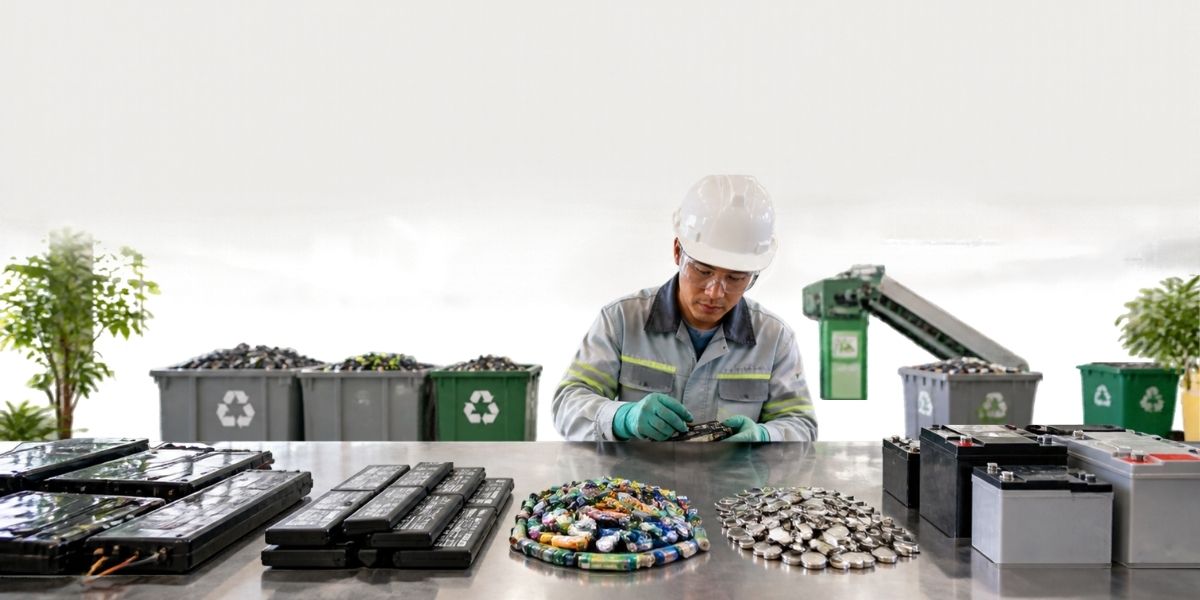
A dead remote-control battery, a swollen laptop battery, and a used car battery may all seem like waste, but they should not be handled in the same way. Batteries contain different materials and use different chemistries. Some can leak corrosive substances, while certain lithium-ion batteries can catch fire if damaged, crushed, or handled incorrectly.
For households, offices, schools, factories, and businesses, knowing how to dispose of battery waste safely is an important part of responsible waste management.
The right approach depends on the battery type, its condition, and where it came from. This guide explains how to handle common types of used batteries, what mistakes to avoid, and when professional battery waste disposal services can help.
What Is Battery Waste and Why Does It Need Special Handling?
Battery waste includes batteries that are depleted, damaged, expired, no longer needed, or unsuitable for further use. These may come from everyday household products, electronic devices, vehicles, backup power systems, and industrial equipment.
Different batteries contain different combinations of metals, electrolytes, and other materials. Some materials can be recovered through suitable recycling processes, but improper handling can create safety and environmental risks.
For example, a discarded lithium-ion battery may retain energy even when a device no longer works. If its terminals short-circuit or the battery is physically damaged, it may overheat or catch fire. Lead-acid batteries, commonly used in vehicles and backup systems, contain corrosive electrolyte and lead-bearing components that require careful handling.
Battery waste should therefore be kept separate from ordinary rubbish and sent through an appropriate collection and recycling route.
How to Dispose of Different Types of Battery Waste Safely
Before deciding what to do with a used battery, identify its type if possible. Check the label, device manual, or manufacturer’s guidance. If the battery is damaged, swollen, leaking, or difficult to identify, avoid experimenting with it.
1. Alkaline and Zinc-Carbon Batteries
These are commonly found in television remotes, wall clocks, toys, flashlights, and other small household devices.
How to handle them:
- Remove the batteries from the device when they are no longer needed.
- Keep used batteries in a dry place away from heat and moisture.
- Store them so that their terminals cannot come into contact with metal objects.
- Use a designated battery collection point or an authorised collection route where available.
Do not assume that every battery collection programme accepts every battery chemistry. Check the collection point’s instructions before dropping off alkaline or zinc-carbon cells.
Avoid burning batteries or crushing them to reduce their size.
2. Lithium-Ion Batteries
Lithium-ion batteries are used in smartphones, laptops, tablets, power banks, cameras, cordless tools, and many other rechargeable products.
These batteries need particular care because damage, overheating, or short-circuiting can lead to fire.
How to handle them:
- Follow the device manufacturer’s instructions for removing the battery, if it is designed to be removable.
- Do not puncture, crush, bend, dismantle, or attempt to repair a discarded battery.
- Protect exposed terminals from accidental contact with conductive materials.
- Keep batteries away from direct heat, flames, and moisture.
- Take usable, undamaged batteries to a collection or recycling route that accepts lithium-ion batteries.
If a battery is swollen, unusually hot, leaking, or visibly damaged, do not place it in an ordinary battery collection box without checking the handling instructions. Keep people away from it and seek advice from the manufacturer, a qualified battery professional, or the relevant local waste-management authority.
If a battery is smoking, hissing, or heating rapidly, do not handle or transport it yourself. Move away, keep others clear, and contact emergency services.
3. Lead-Acid Batteries
Lead-acid batteries are widely used in cars, motorcycles, inverters, and some backup power systems.
These batteries contain lead and corrosive electrolyte. A cracked casing or leaking battery can expose people to hazardous substances.
How to handle them:
- Keep the battery upright and avoid rough handling.
- Do not open the casing, drain the electrolyte, or try to dismantle the battery.
- Prevent contact with leaking liquid.
- Keep the battery away from children and areas used for food preparation.
- Arrange collection through an appropriate battery dealer, collection programme, or recycling service that accepts lead-acid batteries.
Businesses that replace vehicle or backup batteries in large quantities should maintain records of collection and transfer. Batteries should not be abandoned in storage areas or sent out with mixed scrap without checking the receiving facility’s suitability.
4. Nickel-Cadmium and Nickel-Metal Hydride Batteries
Nickel-cadmium (Ni-Cd) and nickel-metal hydride (Ni-MH) batteries may be found in older rechargeable equipment, emergency lighting, cordless tools, and some specialised devices.
Nickel-cadmium batteries contain cadmium, which requires careful management. Nickel-metal hydride batteries have a different chemistry, so the two should not automatically be treated as interchangeable.
How to handle them:
- Identify the battery chemistry from its label where possible.
- Keep used batteries separate from loose metal objects.
- Avoid opening, crushing, or burning them.
- Use a battery collection or recycling service that accepts the relevant chemistry.
Do not place unidentified rechargeable batteries into a collection stream unless the collection provider confirms that it accepts them.
5. Button and Coin Cell Batteries
Small button and coin cells are used in watches, calculators, key fobs, medical devices, and some household electronics.
Their small size can make them easy to overlook, but they still require proper handling. Some button cells contain materials that should be recovered or managed through suitable recycling channels. If swallowed, certain button cells can cause serious internal injuries, particularly in children.
How to handle them:
- Keep used cells out of the reach of children and pets.
- Store them in a secure container where they cannot be swallowed or accidentally short-circuited.
- Cover exposed terminals where appropriate and consistent with the collection provider’s instructions.
- Take them to a collection point that accepts button or coin cells.
Never leave loose button batteries on a desk, in an open drawer, or in a container accessible to young children.
6. Industrial and Backup Power Batteries
Factories, data centres, hospitals, telecom facilities, commercial buildings, and offices may use batteries in uninterruptible power supply (UPS) systems, backup power equipment, and industrial machinery.
These batteries can be heavy, connected in groups, or installed in systems with electrical hazards. Removing them may require technical knowledge and suitable equipment.
How to handle them:
- Ask a qualified technician to disconnect batteries that are part of an installed electrical system.
- Identify the chemistry, quantity, condition, and location of the batteries.
- Keep damaged or leaking units separate from routine collection, following professional guidance.
- Arrange collection and transportation with a service provider equipped to handle that battery type.
- Keep relevant records of the batteries handed over and their destination.
For businesses managing multiple sites or large quantities of batteries, a documented collection and disposal plan is generally more practical than treating each replacement as an isolated task.
Why Should Battery Waste Never Be Mixed With Regular Garbage?
Putting used batteries into ordinary rubbish can expose them to crushing, puncturing, moisture, and other conditions that may cause leakage or short-circuiting. Damaged lithium-ion batteries can create a fire risk, while other battery types may release substances that require controlled handling.
Mixed waste also makes it harder to recover useful materials.
Appropriate battery recycling can help recover materials for further use, depending on the battery chemistry and the recycling process. Separating batteries at the point where they become waste makes safer handling and appropriate processing easier.
Battery waste management is relevant to more than households. Offices replacing laptops and UPS batteries, educational institutions disposing of electronic equipment, and factories managing industrial batteries all need a clear process for collecting and transferring used batteries.
Common Mistakes to Avoid When Disposing of Batteries
A few seemingly harmless actions can create avoidable risks.
Throwing all batteries into one container: Different chemistries and conditions may require different handling. Separate batteries according to the collection provider’s instructions.
Leaving loose terminals exposed: Battery terminals may touch keys, tools, coins, or other conductive objects. This can cause a short circuit, especially with rechargeable batteries.
Opening or dismantling batteries: Cutting open a battery or attempting to remove its internal materials can expose people to corrosive or hazardous substances and create fire risks.
Storing damaged batteries with normal waste: Swollen, leaking, hot, or physically damaged batteries should not be treated like routine used cells. Follow specialist handling guidance.
Burning or burying batteries: These practices are not suitable disposal methods and can create environmental and safety hazards.
Using an unverified collection service: Businesses should check whether a service provider accepts the relevant battery chemistry and can explain its collection and handling process.
Best Practices for Safe Battery Waste Management
Safe disposal starts before a battery reaches the end of its useful life. A few simple habits can make a meaningful difference.
- Identify the battery type. Check the label or manufacturer’s guidance before choosing a disposal route.
- Keep batteries separate from general waste. Establish a designated collection area for routine used batteries, with clear instructions for employees or household members.
- Prevent accidental contact between terminals. Use suitable storage arrangements and follow the collection provider’s instructions, particularly for lithium-ion and other rechargeable batteries.
- Keep batteries in appropriate conditions. Avoid excessive heat, direct sunlight, moisture, and crushing. Follow the manufacturer’s storage guidance for the specific battery chemistry.
- Do not handle damaged batteries casually. Swollen, leaking, hot, or otherwise damaged batteries need a more cautious approach. Seek advice from a qualified professional.
- Choose a suitable collection and recycling route. Confirm that the receiving service accepts the battery type and condition.
- Train staff where batteries are generated regularly. Offices, workshops, factories, and institutions should make sure employees know where used batteries go and what to do with damaged ones.
- Maintain records for business collections. Record the type and quantity of batteries collected, the handover details, and the receiving service where appropriate.
For Indian businesses, battery waste obligations may depend on the organisation’s role, the type of battery, and the applicable rules. Where compliance requirements apply, verify the current requirements with official guidance or a qualified compliance professional rather than relying on a general disposal checklist.
When Should You Use Professional Battery Waste Disposal Services?
For a small number of ordinary household batteries, a suitable collection point may be sufficient. Professional assistance becomes more important when the batteries are industrial, damaged, heavy, installed in equipment, or generated in large quantities.
Consider professional support if your organisation:
- Replaces large numbers of UPS, inverter, vehicle, or industrial batteries.
- Has batteries that require controlled handling or specialised collection.
- Needs to coordinate battery waste across several locations.
- Wants documented collection and transfer records.
- Needs help identifying suitable recycling routes.
- Must assess its responsibilities under applicable battery waste rules.
A service provider should be able to explain what battery types it accepts, how collection is arranged, what safety precautions are required, and what documentation can be supplied.
BRP Infotech provides battery waste disposal services for organisations looking to manage battery waste through an organised process. Businesses handling both batteries and other discarded electronics may also find its e-waste management services relevant.
Conclusion
The safest way to dispose of battery waste is to identify the battery, keep it in suitable conditions, prevent damage and short-circuiting, and use a collection route designed for its chemistry and condition.
A small household battery and a large industrial battery may need very different arrangements. Businesses should pay particular attention to damaged batteries, large collection volumes, documentation, and applicable compliance requirements.
By treating battery disposal as a planned part of waste management, rather than mixing batteries with ordinary rubbish, households and organisations can reduce avoidable risks and support more responsible material recovery.
If your business needs help managing used batteries or larger quantities of battery waste, BRP Infotech’s battery waste disposal services are a relevant place to explore your options.
7. FAQs
1. Can I throw used batteries in the regular garbage?
It is better to keep batteries separate from ordinary waste. Use a collection point or recycling service that accepts the specific battery type. Damaged batteries require additional precautions.
2. How should lithium-ion batteries be disposed of?
Keep the battery away from heat and conductive objects, protect its terminals as appropriate, and use a collection service that accepts lithium-ion batteries. Never crush, puncture, or dismantle them. If a battery is swollen, leaking, or overheating, seek specialist guidance.
3. How do I dispose of old inverter or car batteries?
Keep lead-acid batteries upright, avoid contact with leaking electrolyte, and arrange collection through a suitable battery dealer or recycling service. Do not open or dismantle them yourself.
4. Are rechargeable batteries different from regular batteries?
Yes. Rechargeable batteries may use lithium-ion, nickel-cadmium, nickel-metal hydride, or other chemistries. Their handling and recycling requirements can differ, so identify the type before selecting a collection route.
5. Can damaged batteries be recycled?
They may be recyclable, but damaged batteries can pose additional risks during storage and transportation. Do not put them into a routine collection box without checking its instructions. Consult a qualified battery professional or the relevant collection service.
6. Why should businesses maintain battery disposal records?
Records help businesses track the type and quantity of batteries collected, document transfers, and demonstrate how waste was handled. They may also support internal reviews and applicable compliance requirements.
7. Do Indian businesses have battery waste compliance responsibilities?
Some businesses may have obligations under applicable Indian battery waste rules, depending on their role and activities. Producers, importers, recyclers, and other entities may have different responsibilities. Verify the current requirements through official government guidance or a qualified compliance professional.